Ledger Live: Account Management Features
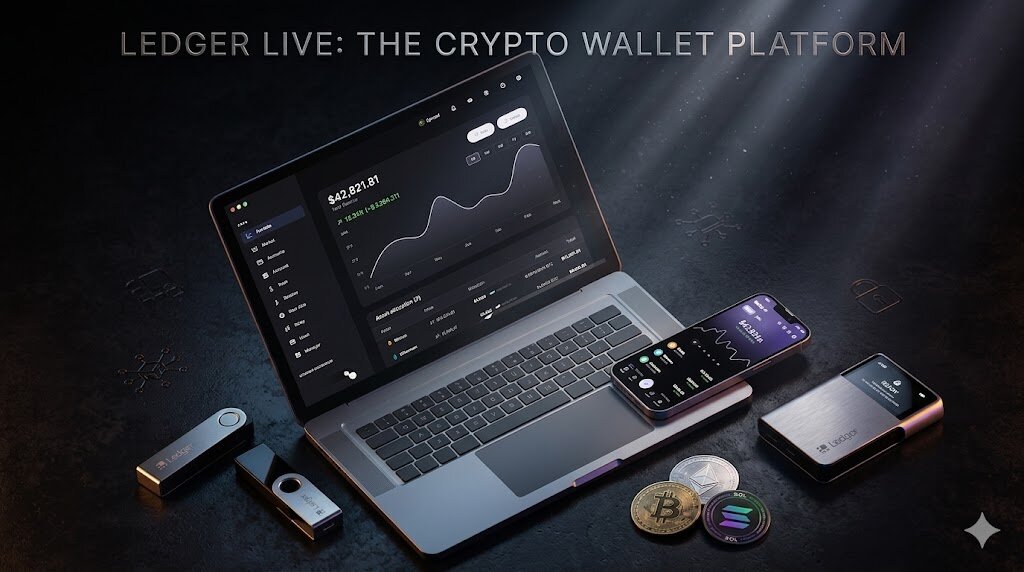
Ledger Live account management features handle how users organize, configure, and maintain their crypto accounts across multiple blockchains. The Ledger Live application treats account management as a foundational capability that affects every other operation users perform, with proper account organization producing better long-term experience than ad-hoc setups that grow chaotic over time.
Account management becomes increasingly important as users accumulate holdings across multiple blockchains and develop more sophisticated crypto usage patterns. The Ledger Live application supports everything from simple single-account setups through complex multi-blockchain arrangements with dozens of accounts organized for different purposes. Understanding the account management capabilities helps users structure their holdings logically rather than letting account organization emerge accidentally from initial setup decisions.
This overview examines Ledger Live account management across its primary aspects, from initial account creation through ongoing organization and maintenance activities. The Ledger Live application handles account-related operations through dedicated interface elements that make multi-account management practical even for users with substantial diverse holdings across the various supported blockchain networks.
Ledger Live Account Creation
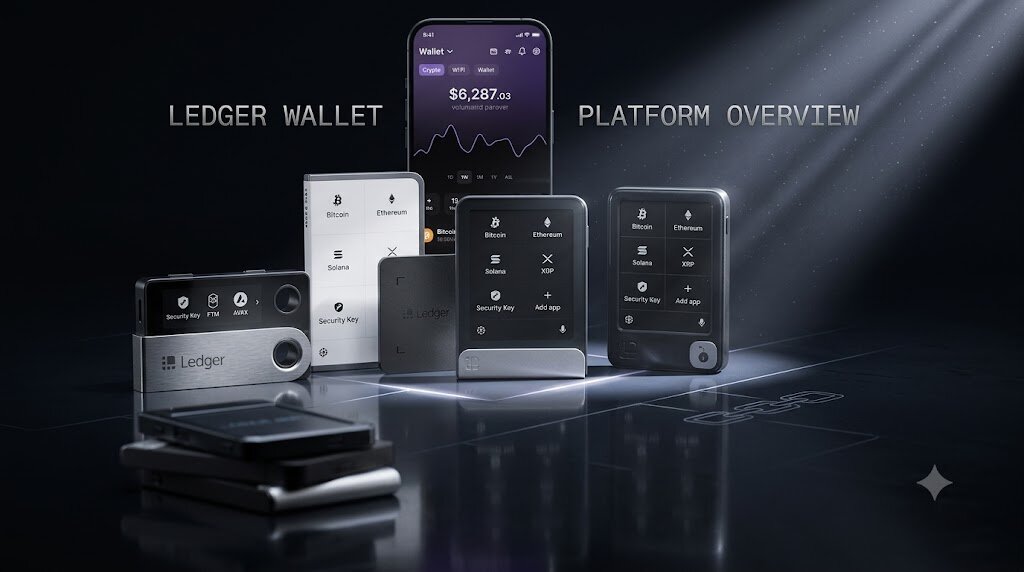
Ledger Live account creation establishes new accounts on supported blockchains for users to manage their holdings. Understanding account creation clarifies how the initial setup works.
Adding New Accounts
Adding new accounts in Ledger Live happens through the account management interface where users select which blockchain they want to create an account on. The Ledger Live application requires the corresponding chain-specific app installed on the connected hardware device before account creation can proceed for that blockchain. Account creation generates blockchain addresses derived from the recovery phrase through standard hierarchical deterministic algorithms, with the addresses being unique to each account while all deriving from the same underlying master seed. The Ledger Live add account flow handles all the technical derivation details transparently, with users simply selecting blockchains rather than dealing with derivation paths or cryptographic specifics. Users add accounts as needed throughout their Ledger Live usage rather than being limited to whatever accounts they created during initial setup.
Multi-Account Support per Blockchain
Multi-account support per blockchain in Ledger Live lets users maintain multiple separate accounts within the same network. The Ledger Live application supports creating multiple Bitcoin accounts, multiple Ethereum accounts, and similar multi-account arrangements across other supported blockchains. Each account within the same blockchain has different derivation paths producing different addresses, with the separation letting users compartmentalize holdings within the same network. Multi-account arrangements suit
various organizational patterns including separating long-term holdings from active trading capital, separating personal funds from business funds, or various other distinctions that benefit from clean account boundaries. The Ledger Live multi-account capability scales without arbitrary limits, supporting whatever account count users find appropriate for their specific organizational needs.
Account Restoration After Reset
Account restoration after reset in Ledger Live happens automatically through recovery phrase derivation. The Ledger Live application can restore previously existing accounts after device resets, replacement devices, or new installations through the standard derivation process from the recovery phrase. Users don't need to manually recreate each account they previously had, since the deterministic derivation produces the same accounts every time from the same recovery phrase. The restoration capability protects against scenarios where account configurations get lost through application reinstallation or device replacement, with the underlying accounts being recoverable as long as users maintain their recovery phrase backups. The Ledger Live restoration process treats accounts as derived properties of the recovery phrase rather than as separate stored entities that need explicit backup beyond the recovery phrase itself.
| Ledger Live Account | Function | Modifiable Element |
|---|---|---|
| Account name | User identification | Yes |
| Derivation path | Cryptographic address | No derivation |
| Blockchain network | Asset compatibility | No |
| Account address | Receiving location | Generated |
| Balance display | Current holdings | Automatic |
| Transaction history | Activity record | Read-only |
| Account icon | Visual identification | Yes |
| Hide option | Display preference | Yes |
Ledger Live Account Organization

Ledger Live account organization helps users structure their accounts logically for practical management. Understanding organization clarifies how to keep accounts manageable.
Custom Account Naming
Custom account naming in Ledger Live lets users assign meaningful labels to accounts beyond default names. The Ledger Live application defaults to generic names like "Bitcoin 1" or "Ethereum 2" for new accounts, with users renaming accounts to descriptive labels that reflect their actual purposes. Custom names help users distinguish between multiple accounts on the same blockchain, particularly when running several accounts for different purposes like personal versus business or trading versus long-term holding. The Ledger Live naming flexibility makes account identification practical even with substantial multi-account arrangements, since meaningful names eliminate the mental overhead of remembering which numbered account serves which purpose. Account naming changes happen quickly through the account settings, with the new names appearing throughout the application immediately.
Account Display Ordering
Account display ordering in Ledger Live affects how accounts appear throughout the application interface. The Ledger Live application typically displays accounts in the order they were created, though users can reorganize the display through drag-and-drop or similar interface affordances. Display ordering matters for users with many accounts since the order affects how quickly users find specific accounts during normal usage. Logical ordering by importance, by blockchain, or by purpose helps users navigate large account collections efficiently. The Ledger Live display preferences persist across sessions, with users establishing their preferred ordering once and then benefiting from that organization throughout subsequent usage rather than re-establishing the order with each session.
Account Categorization Approaches
Account categorization approaches in Ledger Live let users group accounts by various criteria. The Ledger Live application supports informal categorization through naming conventions where users prefix account names with category indicators. Some users implement systematic naming like "Personal-Bitcoin-Cold" or "Trading-Ethereum-Active" that creates implicit categorization through the naming patterns. The categorization helps users navigate their accounts logically even when the application doesn't include explicit category features. Users developing personal categorization approaches benefit from consistency, with established conventions making it easy to find specific accounts and understand which categories each new account belongs to as the overall account collection grows over time.
Ledger Live Account Configuration

Ledger Live account configuration handles the various settings and options that affect how accounts function. Understanding configuration clarifies what users can customize.
Account-Specific Settings
Account-specific settings in Ledger Live let users configure individual account behavior independently. The Ledger Live application provides per-account configuration options including display preferences, transaction history visibility, and various other settings that affect how each account operates within the broader application. Different accounts sometimes benefit from different settings based on their specific purposes, with users adjusting configurations to match each account's role. The account-specific configuration represents one of the more flexible aspects of the Ledger Live application, since global settings would force compromises that account-specific options avoid by letting each account operate according to its individual needs. Settings persist across sessions and
propagate appropriately when account configurations sync across multiple Ledger Live installations through optional synchronization features.
Custom Token Configuration
Custom token configuration in Ledger Live extends account capabilities beyond default supported tokens. The Ledger Live application lets users add custom tokens to accounts on compatible blockchains, with users providing contract addresses for the specific tokens they want to track within each account. Custom token addition particularly matters for users active in DeFi where new tokens regularly appear beyond what default lists include. The Ledger Live token configuration happens per-account rather than globally, meaning users can have different custom tokens visible on different accounts based on which tokens are relevant to each account's specific activity. The granular configuration prevents account clutter that would result from showing all custom tokens on all accounts regardless of relevance.
Privacy and Visibility Options
Privacy and visibility options for Ledger Live account configuration let users control how accounts display. The Ledger Live application supports hiding specific accounts from the main interface when users don't want to see them constantly, with hidden accounts still being accessible through specific interface options when needed. The hide functionality helps users with many accounts focus on their primary holdings without removing accounts they occasionally need. Privacy options also include hiding balance amounts when users want screen contents that don't display financial details to anyone who might see the screen. The combined visibility controls let users tailor what the Ledger Live application actually displays based on their current preferences and operational situations.
Ledger Live Account Operations

Ledger Live account operations cover the day-to-day activities users perform with their accounts. Understanding operations clarifies the practical aspects of account usage.
Balance Synchronization
Balance synchronization in Ledger Live keeps account balances current with actual blockchain state. The Ledger Live application syncs balances from blockchain networks automatically when users open the application, with balances updating as new blockchain confirmations affect account states. Synchronization happens transparently in the background without requiring user action, with the displayed balances reflecting current network state rather than static information. The sync process handles all the technical aspects of querying blockchain networks and parsing the responses, with users simply seeing current balance information throughout normal application usage. Synchronization timing varies somewhat across blockchains based on each network's specific characteristics, with most balances updating within seconds of new transactions being confirmed.
Account-Level Transaction History
Account-level transaction history in Ledger Live shows detailed records for each individual account. The Ledger Live application maintains separate transaction history for each account, letting users review activity within specific accounts rather than just aggregated activity across all holdings. The per-account history includes incoming transactions, outgoing transactions, internal transfers, swap operations, and various other activities that affect each account specifically. Transaction details include amounts, counterparties, timestamps, fees, and various other metadata that helps users understand each operation. The Ledger Live account-level history particularly benefits users running multiple accounts for different purposes, since each account's history reflects only its own activities rather than mixing operations from across the broader account collection.
Account Backup Considerations
Account backup considerations in Ledger Live center on the recovery phrase that controls all derived accounts. The Ledger Live account configuration like names, custom token additions, and various display preferences gets stored locally rather than being part of the underlying cryptographic backup, with these configurations being recreatable rather than catastrophically lost during application reinstallation. Some users export account configuration manually as additional backup beyond just the recovery phrase, though this configuration backup represents operational convenience rather than security necessity. The fundamental backup that matters for actual asset recovery is the recovery phrase, with account-specific configurations being secondary preferences that users can recreate through manual reconfiguration after recovery if needed.
The major Ledger Live account management workflow steps include the following:
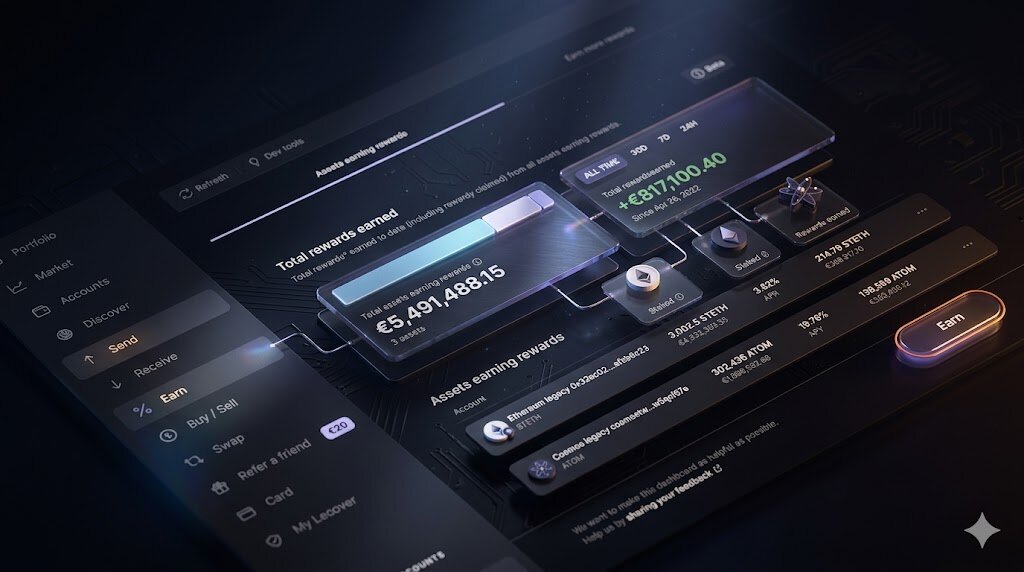
1. Creating new accounts for desired blockchains 2. Naming accounts with meaningful identifying labels 3. Organizing account display order for efficient navigation 4. Configuring account-specific settings as needed
5. Adding custom tokens to relevant accounts 6. Monitoring balance synchronization across accounts 7. Reviewing per-account transaction history 8. Hiding accounts that don't need constant visibility
Ledger Live Advanced Account Features
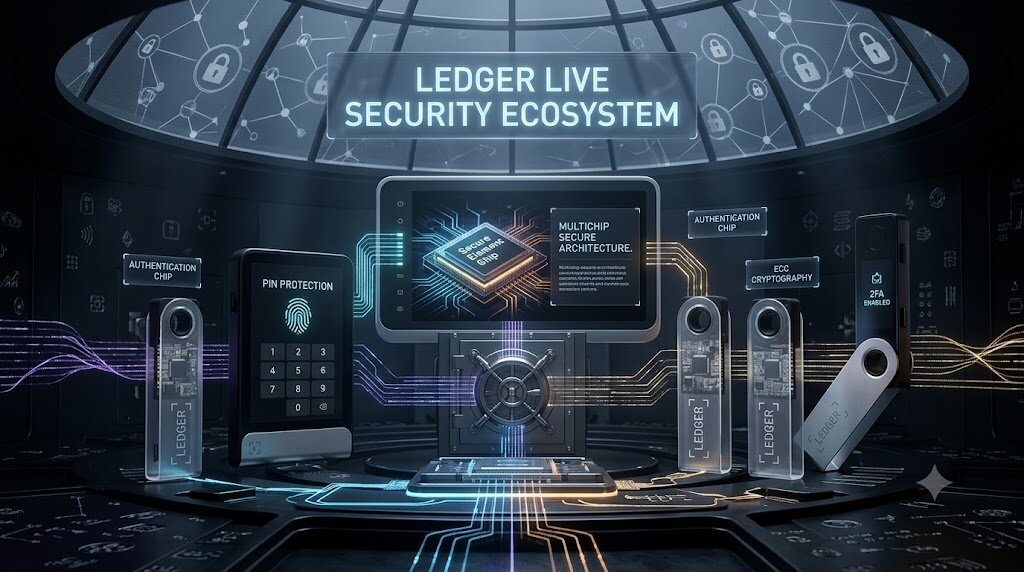
Ledger Live advanced account features extend basic account management into more sophisticated capabilities. Understanding advanced features clarifies the broader account management depth.
Cross-Installation Account Sync
Cross-installation account sync in Ledger Live coordinates account configurations across multiple application installations. The Ledger Live Sync feature optionally propagates account names, ordering, custom tokens, and various other configuration aspects between installations on different devices. The synchronization eliminates the manual reconfiguration that would otherwise be needed when users add new installations or switch between desktop and mobile versions. Cross-installation sync works through encrypted communication that doesn't expose user data to external parties beyond what the synchronization specifically requires. Users running Ledger Live across multiple devices benefit substantially from sync features that maintain consistent account experiences across all their installations rather than treating each installation as independent.
Account Operation Permissions
Account operation permissions in Ledger Live derive from the hardware device authorization model rather than account-specific permission systems. The Ledger Live application doesn't
implement traditional account permissions like read-only access since the hardware authorization model makes such permissions less necessary. Every transaction-affecting operation requires hardware device confirmation regardless of which account it affects, with the authorization model providing the same security across all accounts rather than tiered permissions that vary by account. Some advanced users implement separation through using different devices for different accounts when they want stricter operational boundaries, though most users find the standard authorization model sufficient for their needs across their account collections.
Watch-Only Account Behavior
Watch-only account behavior in Ledger Live happens when users disconnect their hardware devices. The Ledger Live application shows balance and transaction information for all accounts even without connected devices, with the device connection becoming required only when users want to perform actual transactions. This effective watch-only mode lets users check their portfolios from devices without their hardware wallets connected, providing balance awareness without the operational capability that hardware connection enables. The behavior particularly benefits users who want to check holdings briefly during periods when connecting hardware wallets would be inconvenient, with the read-only access preserving operational security while still providing the information that wallet checking primarily seeks.
Common Ledger Live account management characteristics across the broader system include:
- Account creation requiring chain-specific apps on devices
- Multiple accounts per blockchain for organizational flexibility
- Custom account naming for meaningful identification
- Account display ordering for efficient navigation
- Per-account settings configuration
- Custom token addition on per-account basis
- Account hiding for focused interface display
- Balance synchronization handling automatically
- Per-account transaction history detail
- Recovery phrase as fundamental backup for all accounts